

AI voice agents can sound natural in controlled demos and still fail during live calls. Interruptions, background noise, unfamiliar accents, response delays, and incorrect intent recognition can quickly reduce call quality.
Voice agent platforms differ in latency, telephony and SIP support, turn-taking, model and voice flexibility, and testing capabilities. Teams also need structured evaluation to measure whether agents respond accurately and consistently across realistic call scenarios.
This guide compares five leading platforms for building and testing AI voice agents. Braintrust adds evaluation and observability to any voice stack, allowing teams to trace calls, score conversations, and rerun test cases after every prompt or model change.
What an AI voice agent platform does
An AI voice agent platform coordinates the technology required to hold a live conversation. A common architecture uses speech-to-text to transcribe the caller, a large language model to interpret the request and select a response or action, and text-to-speech to stream the reply as audio. Some platforms use real-time speech-to-speech models, but they still need to manage turn detection, session context, interruptions, and phone or web connections.
Production performance depends on how reliably speech recognition, reasoning, voice generation, and call controls work together. The agent must recognize when the caller has finished speaking, stop when interrupted, retain context across turns, complete permitted actions, and recover from transcription or network errors. A natural voice alone cannot confirm that the agent understood the request or completed the task correctly.
How AI voice agent platforms differ
Use the criteria below to compare how each platform handles live calls and how much control it gives builders.
Latency: End-to-end latency is the time between the caller finishing a turn and hearing the agent's response. Speech recognition, model processing, tool calls, and speech generation all contribute to the delay, so latency should be measured across realistic call conditions.
Telephony and SIP support: Voice agents connect to the phone network through provisioned numbers, carrier integrations, or SIP trunking. Platforms differ in their support for existing phone systems, inbound and outbound calls, regional numbers, call transfers, and routing rules.
Turn-taking and interruption handling: Turn detection determines when the caller has finished speaking and when the agent should respond. Reliable handling allows the agent to pause when interrupted, avoid speaking over the caller, and continue without losing conversation context.
Model and voice flexibility: Some platforms allow teams to select speech recognition, language, and voice models from multiple providers. Others use a vendor-managed stack with fewer component choices. Choosing between a multi-provider stack and a vendor-managed one affects configuration effort, which providers a team can use, and how easily an individual model can be swapped.
Testability: Testing capabilities may include simulated calls, conversation replay, transcript review, and automated checks for task completion or response quality. Native coverage varies, and production conversations still need evaluation as prompts, models, tools, and policies change.
5 AI voice agent platforms to know in 2026
1. Vapi: Developer-first voice agent platform
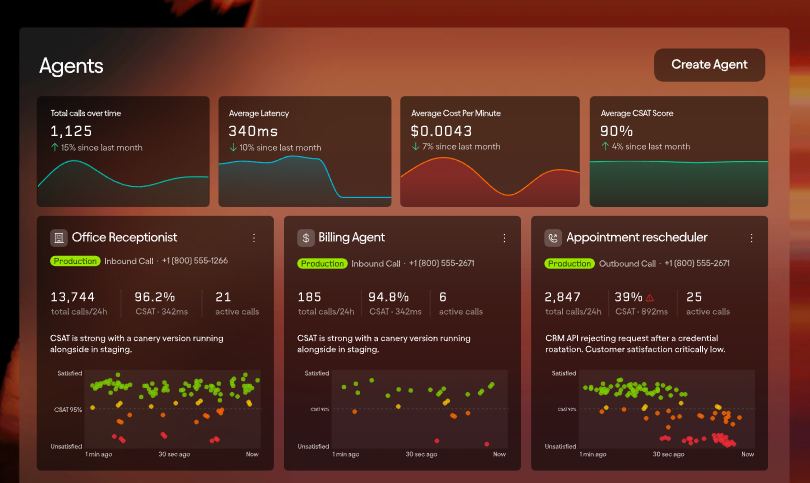
What it is: Vapi provides APIs and SDKs for building voice agents that make and receive phone calls or run through web and mobile interfaces. Teams can configure separate transcription, language, and voice models, while Vapi manages the real-time orchestration.
Known for: Developer control across the voice stack. Vapi supports managed phone numbers, SIP, and imported numbers from Twilio, Vonage, Telnyx, and other telephony providers. Its testing tools include automated test suites, voice calls, and AI-caller simulations evaluated against defined criteria.
Commonly used for: Support, scheduling, lead qualification, and receptionist agents that require specific model, voice, telephony, or tool integrations.
Worth noting: Response time and call quality depend on the complete provider chain. Teams need to test the selected speech recognition, language model, voice, and telephony configuration as one system.
2. Retell AI: Managed AI phone agents
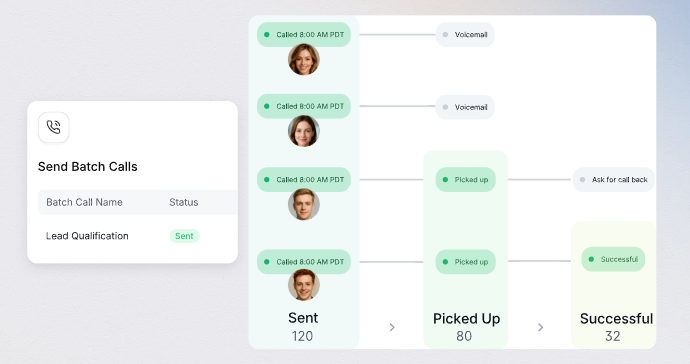
What it is: Retell AI combines voice-agent orchestration, telephony deployment, and call monitoring. Teams can build prompt-based agents or node-based Conversation Flow agents, then use Retell phone numbers or connect existing telephony through SIP.
Known for: Managed phone-agent deployment. Retell handles turn-taking and interruptions at the orchestration layer, reports latency for individual calls, and supports automated simulation testing and production A/B tests.
Commonly used for: Customer support, lead qualification, appointment booking, and other inbound or outbound calls where teams want managed real-time audio and telephony with prompt or visual flow control.
Worth noting: Retell supports multiple languages and voice models, but its orchestration and agent runtime remain managed services. Teams that need to self-host the media infrastructure will have less low-level control.
3. Bland: End-to-end AI phone calling at scale
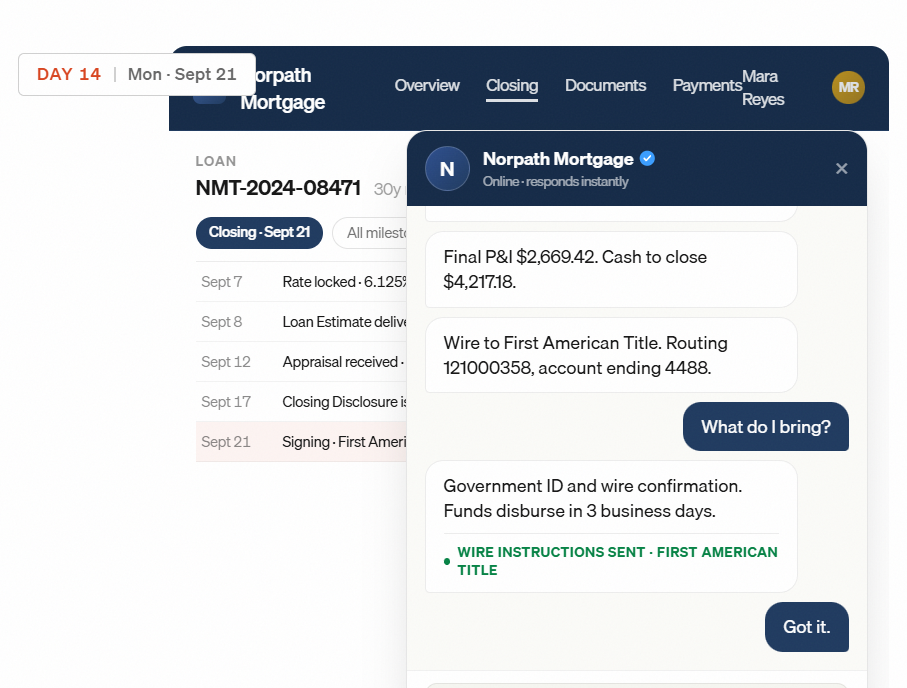
What it is: Bland is an API-first platform for inbound and outbound phone agents, web agents, and batch calling. Agents can follow a prompt or a node-based Conversational Pathway, connect to external APIs, transfer calls, and return post-call data.
Known for: High-volume phone operations. Bland supports simultaneous batches of thousands of calls, SIP connectivity, and dedicated infrastructure for enterprise customers. Its documentation states that the voice stack runs on Bland's self-hosted infrastructure.
Commonly used for: Outbound qualification, inbound support, appointment booking, and call processes that require transfers, API actions, or controlled conversation paths.
Worth noting: Model selection centers on Bland's base and turbo options. Its current testing coverage includes text and voice simulations, real phone calls, per-node tests, reusable scenarios, batch runs, and evals. Dedicated infrastructure, version-pinned releases, and canary deployments are enterprise features.
4. LiveKit Agents: Open-source real-time voice infrastructure
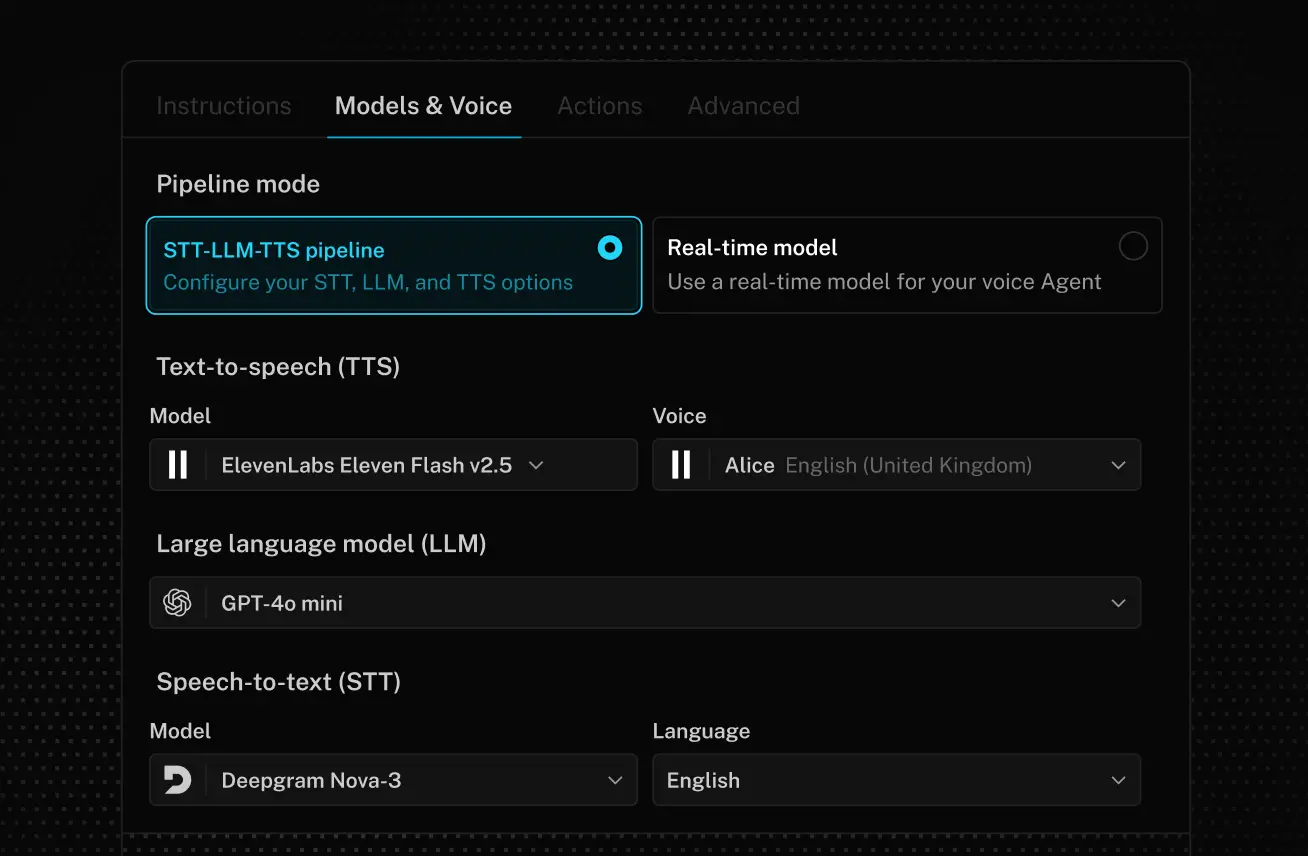
What it is: LiveKit Agents is an Apache 2.0-licensed framework for building real-time voice, video, and physical AI agents with Python or Node.js. It provides media transport, session orchestration, turn handling, and integrations with speech and language model providers.
Known for: Infrastructure control and model flexibility. Teams can assemble an STT-LLM-TTS pipeline, use a real-time speech-to-speech model, or combine a real-time model with a separate voice model. LiveKit supports self-hosted deployment, LiveKit Cloud, provisioned phone numbers, and third-party SIP providers.
Commonly used for: Products that require custom real-time media behavior across phone, browser, mobile, voice, or video channels.
Worth noting: LiveKit includes behavioral testing helpers, an agent console, and Cloud observability. Fully self-hosted deployments require teams to run and scale the agent servers, deploy the SIP service separately for telephony, and connect their own observability tools.
5. ElevenAgents: Voice agents built on high-quality TTS
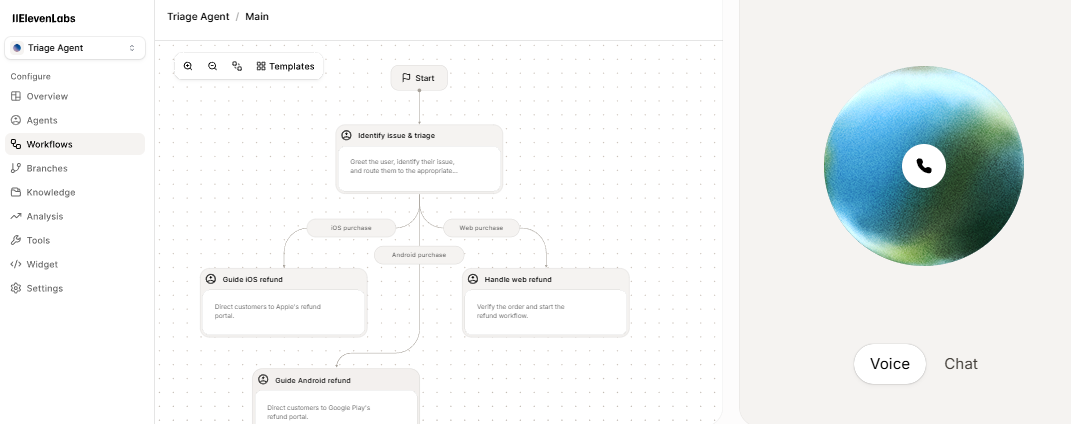
What it is: ElevenAgents, previously called ElevenLabs Agents, is ElevenLabs' platform for configuring, deploying, and monitoring voice and multimodal agents. It combines ElevenLabs speech recognition and voice models with a supported or custom language model and a proprietary turn-taking model.
Known for: Voice selection and direct integration with ElevenLabs' speech stack. Agents can connect through native telephony integrations or SIP, while built-in testing covers multi-turn simulations, next-reply checks, and tool-call validation.
Commonly used for: Customer support, reception, lead qualification, scheduling, and multilingual or branded voice experiences across phone and digital channels.
Worth noting: The speech recognition, voice generation, and turn-taking layers remain centered on ElevenLabs models, while teams retain language model choice through supported and custom integrations.
Honorable mention: Pipecat
Pipecat is a BSD-2-licensed open-source Python framework for building voice and multimodal agents. It supports more than 100 AI services, can run on a team's own infrastructure or Pipecat Cloud, and includes Pipecat Evals for scripted conversations, deterministic assertions, and LLM-judged behavior.
Best AI voice agent platforms compared (2026)
The table below compares how the five platforms handle the core technical requirements of production voice agents.
| Dimension | Vapi | Retell AI | Bland | LiveKit Agents | ElevenAgents |
|---|---|---|---|---|---|
| Latency | Configuration-dependent; varies across the selected STT, LLM, TTS, and telephony providers | Managed low-latency orchestration with end-to-end and component latency reported per call | Vendor-reported sub-400 ms across Bland's managed voice stack | Depends on the selected models, plugins, deployment, and turn-handling configuration | Configuration-dependent; ElevenLabs provides low-latency TTS, while LLM and telephony choices affect total delay |
| Telephony and SIP | Vapi-managed numbers, imported Twilio, Vonage, and Telnyx numbers, and SIP trunking | Retell numbers, imported Twilio, Telnyx, and Vonage numbers, and elastic SIP or SIP URI connections | Bland numbers, custom Twilio integration, and enterprise SIP connectivity | LiveKit Cloud phone numbers or external SIP trunks; self-hosted telephony requires a separate SIP service | Imported Twilio or Exotel numbers and SIP trunking for inbound and outbound calls |
| Turn-taking and interruptions | Configurable start- and stop-speaking plans, smart endpointing, and interruption controls | Managed turn-taking with configurable responsiveness, interruption sensitivity, and backchanneling | Managed turn-taking with configurable response timing, interruption thresholds, and interruption blocking | Configurable turn detection, endpointing, adaptive interruption handling, and false-interruption recovery | Proprietary turn-taking model for conversation timing |
| Model and voice flexibility | Multiple providers across STT, LLM, and TTS, with custom component support | Multiple LLM and TTS options, plus custom and cloned voices | Bland base or turbo models with Bland voices, shared voices, and custom voice clones | Wide selection of STT, LLM, TTS, and real-time model plugins and pipeline types | Supported or custom LLMs with ElevenLabs speech recognition, TTS models, and voices |
| Testability | Automated chat and voice test suites; AI-caller simulations are pre-release | LLM simulations with scoring, batch and regression runs, plus web and phone test calls | Node tests, reusable scenarios, batch simulations, and LLM-judged evals | Code-based agent-session tests with mocking, assertions, and multi-turn coverage | Multi-turn simulations, next-reply tests, and tool-call tests |
Matching voice agent platforms to use cases
The best choice depends on how much of the real-time stack the team wants to manage, which model providers it needs, and whether the agent will run on managed or self-hosted infrastructure.
Vapi for configurable voice stacks. Developers can choose STT, LLM, TTS, and telephony providers while Vapi manages real-time orchestration.
Retell AI for managed phone-agent deployment. It combines telephony, prompt or visual conversation design, simulations, monitoring, and production A/B testing in one managed service.
Bland for high-volume phone operations. Batch calling, API actions, and Conversational Pathways support structured inbound and outbound call programs. Dedicated infrastructure is available to enterprise customers.
LiveKit Agents for infrastructure control. The open-source framework supports custom real-time media behavior, broad model integrations, and self-hosted or cloud deployment. Self-hosting requires more engineering work for telephony, scaling, and observability.
ElevenAgents for an ElevenLabs-centered speech stack. Teams can use ElevenLabs speech recognition, voices, and TTS with supported or custom language models across phone and digital channels.
Choosing the runtime determines how calls are handled, but release readiness requires a separate evaluation process. Braintrust connects evaluation with production observability across any voice stack. Teams can attach audio to traces, apply scorers to defined quality criteria, and compare the same call scenarios across prompt or model versions before approving a change.
Our voice agent evaluation guide covers the implementation in detail. Start evaluating voice agents on Braintrust's free tier →
FAQs: Best AI voice agent platforms in 2026
Should you build or buy an AI voice agent?
A managed platform is usually the better starting point when the team wants to focus on conversation design, business integrations, and deployment. Building on real-time infrastructure becomes reasonable when custom media behavior, self-hosting, data residency, or deep routing control are product requirements. A hybrid architecture can also combine managed telephony and media transport with team-owned models, tools, and evaluation.
Why do AI voice agents fail in production?
Failures often originate at the boundaries between components. An incorrect transcript can send the language model toward the wrong intent, while tool timeouts, stale session data, and duplicate retries can disrupt an otherwise accurate response. Diagnosing the cause requires a trace that connects the call audio, transcript, model output, and tool activity.
How do you test an AI voice agent before launch?
Build the test set around business intents, policy boundaries, escalation rules, and the cost of an incorrect action. Give each scenario an expected outcome and conversation-level scoring criteria, then use an AI agent evaluation framework to combine automated scoring with human review and compare prompt or model versions against consistent release thresholds. Carry the approved test cases into continuous evaluation after launch to identify regressions using the same quality criteria.
Do you need telephony or SIP support for a voice agent?
Telephony is required when the agent makes or receives calls through the public phone network. Provisioned phone numbers may be sufficient for a new deployment, while SIP is useful for connecting an existing carrier, PBX, contact center, or company-owned number. Browser and mobile voice agents can use real-time internet audio without a phone connection.
What is the difference between a voice agent platform and real-time voice infrastructure?
A voice agent platform manages more of the application lifecycle, including agent configuration, telephony, conversation orchestration, and deployment. Real-time voice infrastructure supplies the media transport and session primitives, leaving the team to select models, build agent logic, connect tools, and operate testing and monitoring.